- Discover Denmark in brief
An introduction to Denmark’s economic and political landscape, including key facts about the country’s population, business environment and global competitiveness. - Why Denmark is great for doing business
Highlights the factors that make Denmark an attractive destination for investors, including a stable economy, strong innovation ecosystem and a transparent legal system. - Incorporating a business in Denmark – the legal framework
An overview of the main business structures available, including partnerships, sole proprietorships, branches and limited liability companies, and their key legal characteristics. - Bookkeeping requirements and data protection
Explains Denmark’s digital bookkeeping requirements, accounting standards and compliance with EU data protection regulations. - Corporate taxation
Summarises the Danish corporate tax system, including the 22% corporate tax rate, tax residency rules and incentives such as R&D deductions. - Taxation of individuals
Provides an overview of Denmark’s personal tax framework, including progressive income tax rates and the special tax scheme for researchers and highly paid employees. - VAT and other taxes
Outlines the Danish VAT system, excise duties and other taxes relevant to businesses operating in the country.
Download the guide HERE
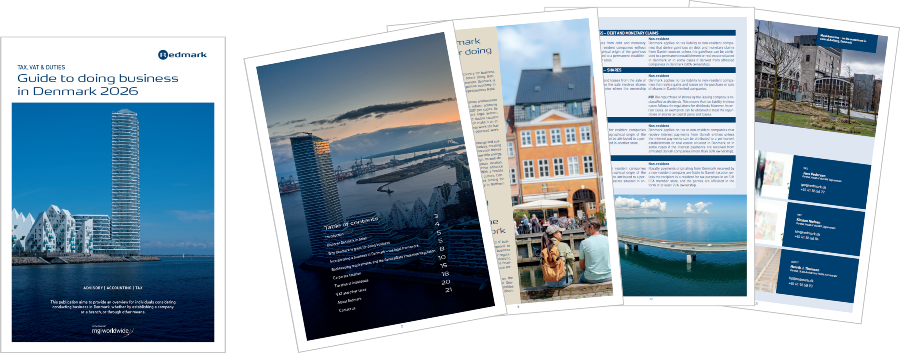
If you’re supporting a client with business interests in Denmark, the guide is a helpful baseline – Redmark can advise on the specifics based on the client’s structure, sector and timeline.
To find out more, please reach out to Redmark via their profile page or website.
Does your country have a Business Guide?
If your country does not have a business guide we would love to hear from you to help you create one — promote your country and your firm! Reach out to Emma Rowley to find out more.
All the latest Business Guides are available in the Member Portal HERE (login required).
MGI Worldwide is a leading global accounting network and association with over 8,500 professionals, across audit, accounting, tax, legal and consulting, in some 440 locations in 100 countries around the world.